How to Choose the Best Stainless Hex Nuts for Your Project?
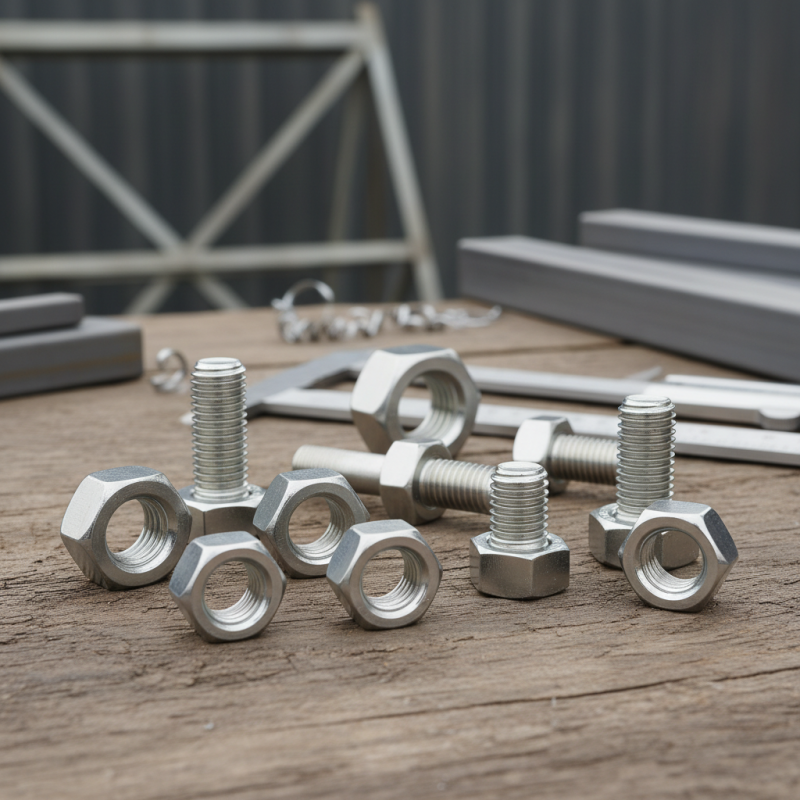
Choosing the right Stainless Hex Nuts for your project can make a significant difference. These nuts come in various sizes and materials. Understanding their specifications is essential to ensure durability and effectiveness.
Consider the environment where the nuts will be used. Corrosion resistance is crucial for outdoor projects. However, too many options can be overwhelming. Sometimes, it can be hard to decide which ones are genuinely suitable.
Take into account the load requirements and compatibility with bolts. Failing to select the right size can lead to project setbacks. Reflect on the materials you choose; not all Stainless Hex Nuts are created equal. Quality matters, and it pays to invest time in researching.
Factors to Consider When Selecting Stainless Hex Nuts
Choosing the right stainless hex nuts is crucial for your project’s success. Start by considering the material. Different grades of stainless steel offer various levels of corrosion resistance. For example, 304 stainless steel is versatile and commonly used, while 316 offers more resilience in harsh environments.
Next, think about the size and thread pitch. Hex nuts come in several sizes. Ensure they match your bolts. A mismatch can lead to issues during assembly. Additionally, check the nut's hardness. Softer nuts may strip easily, while harder options can be more challenging to work with.
Lastly, remember to assess the environment where the nuts will be used. Extreme conditions can impact performance. In some cases, it’s easy to overlook these details, leading to problems later. Reflect on your project’s demands. Every choice affects the outcome, even in the smallest components.
How to Choose the Best Stainless Hex Nuts for Your Project? - Factors to Consider When Selecting Stainless Hex Nuts
| Factor | Description | Recommended Type |
| Material Grade | The corrosion resistance and strength of the hex nuts depend on the material grade. | AISI 304, AISI 316 |
| Size | Select the appropriate size that fits the corresponding bolts. | Metric or Imperial sizes |
| Thread Type | Ensure the thread type matches that of the bolts for a secure connection. | Fine or Coarse threads |
| Finish | Different finishes provide various levels of aesthetics and protection from corrosion. | Plain, Passivated, or Coated |
| Load Rating | Consider the load the nut will support to ensure it can handle the stress. | Look for standard load ratings as per application |
| Environment | Consider the environmental factors such as exposure to chemicals or extreme temperatures. | Choose appropriately based on specific environmental conditions |
Types of Stainless Steel Used in Hex Nuts and Their Properties
When selecting stainless hex nuts for your project, understanding the types of stainless steel is crucial. The two most common types are 304 and 316 stainless steel. Each has distinct properties that affect performance and durability.
Type 304 is often used for everyday applications. It offers good corrosion resistance in mild environments. This makes it a popular choice for home projects or light industrial use. However, it may not perform well in harsh conditions.
Unlike 304, Type 316 is designed for more challenging environments. It has added molybdenum for increased resistance to saltwater and chlorides. This makes it ideal for marine applications or chemical processing.
When choosing hex nuts, think about your specific needs. Consider the environment where the nuts will be used. Will they face moisture or corrosive chemicals? Also, look at how much strength you require. Sometimes, overthinking can lead to indecision. It’s easy to focus on perfect specs and miss the big picture. Choose wisely but remember that flexibility is also important.
Understanding the Size and Thread Specifications for Your Project
When selecting hex nuts for your project, size and thread specifications are critical. The Department of Commerce reports that improper sizing can lead to structural failures. A hex nut must match the bolt’s diameter. For example, a 3/8-inch bolt requires a hex nut with a corresponding inner diameter. This ensures proper fit and functionality.
Thread specifications are equally important. The Unified Thread Standard (UTS) is widely used in the United States. It classifies threads based on pitch and diameter. Take note of coarse versus fine threads. Coarse threads are more forgiving but offer less grip. Fine threads can handle higher tension but are more susceptible to stripping. A study by the American Society of Mechanical Engineers (ASME) states that using mismatched threads can lead to premature failure.
Always check the material specifications too. Stainless steel is a popular choice for its corrosion resistance. However, not all stainless steel is the same. Consider the grade of stainless steel for your environment. If your project is exposed to harsh chemicals, you may need higher-grade options. Balancing these details can be challenging, but overlooking them could compromise your project. Aim for a precise match for durability and performance.
Evaluating the Environmental Resistance of Stainless Hex Nuts
When selecting stainless hex nuts for a project, environmental resistance is crucial. Certain stainless steel grades exhibit superior resistance to moisture, chemicals, and extreme temperatures. For instance, A4 (316) stainless steel shows exceptional corrosion resistance, particularly in marine environments. According to industry reports, it can withstand salt spray tests for over 1,000 hours. This is significant for outdoor applications.
However, not all stainless steel is created equal. Some grades, like A1 (304), may corrode in aggressive environments. This reduces the nut's longevity, leading to premature failures. Reports indicate that 10% of stainless components fail due to improper material selection. When investing time and resources, it's vital to examine the environmental conditions your hex nuts will face.
Always consider the specific requirements of your project. Testing stainless steel nuts in real-world conditions provides insight into their durability. General recommendations might overlook unique challenges in various settings. Careful evaluation prevents costly mistakes and ensures long-lasting performance.
Best Practices for Installation and Maintenance of Hex Nuts
When installing stainless hex nuts, proper technique is crucial. Each nut should be tightened to the manufacturer's specifications. Research indicates that under-tightening can lead to loosening during operation. In contrast, over-tightening may cause threading damage. A torque wrench is often essential for achieving the correct tension. According to industry reports, nearly 30% of assembly failures result from improper torque application.
Maintenance of hex nuts also plays a vital role in their performance. Regular inspections should be conducted to check for corrosion or wear. Stainless steel is resistant, but not immune, to environmental factors. In harsh conditions, it may still corrode. Experts suggest a visual check every six months for projects in tough environments. If rust or degradation is seen, nuts should be replaced immediately. Ignoring these signs can lead to failure.
Using proper lubricants can enhance both installation and longevity. Certain greases can prevent galling, an issue where nuts and bolts seize. Many professionals overlook this step, assuming stainless steel can handle it all. However, a study notes that about 15% of stainless fasteners fail due to lack of lubrication. It's essential to balance efficiency with thoroughness in your installation process.