Top Tips for Choosing the Right Injection Machine Robot?
Choosing the right Injection Machine Robot is crucial in today's manufacturing landscape. Industry expert Dr. Henry Li once stated, “Selecting the appropriate robot can make or break your production efficiency.” This highlights the importance of making informed decisions.
Many factors come into play when selecting an Injection Machine Robot. For instance, the type of materials you use, production volume, and required precision all influence your choice. It's essential to evaluate your specific needs. Robots come in various sizes and capabilities, so knowing what fits your operation is vital.
However, caution is necessary. Not every robot will meet every requirement. Overlooking minor details can lead to inefficiencies. Additionally, not all manufacturers offer robust support. Conduct thorough research and seek expert advice. Investing in the right Injection Machine Robot requires careful consideration and understanding of your process objectives.
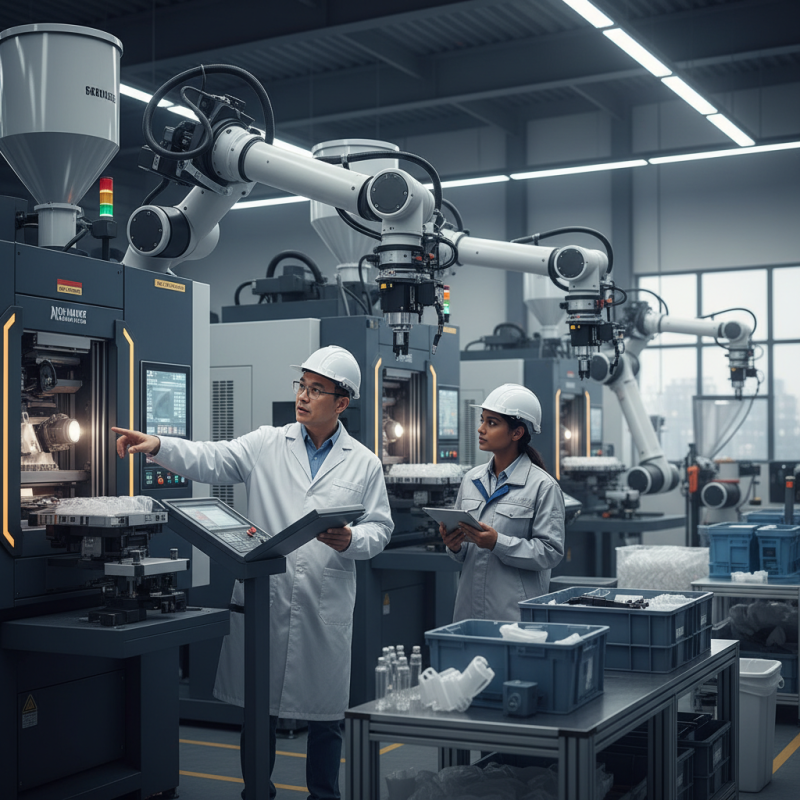
Understanding the Different Types of Injection Machine Robots
When considering injection machine robots, understanding their various types is essential. There are several categories, each serving different application needs. Articulated robots offer flexibility and can maneuver in tight spaces, while Cartesian robots provide precise linear movements. Delta robots excel in high-speed operations, making them perfect for assembly lines and packaging.
Tips: Evaluate your production requirements. Knowing the speed and precision your process demands will help narrow your choices. Also, consider the weight capacity of the robot. Not every robot can handle heavy molds.
Some robots have limitations. Certain articulated models may struggle in high-volume settings. It's vital to match the robot type with your specific task. Also, think about the maintenance needs. Some robots require frequent attention, which can disrupt production.
Lastly, remember the cost implications. While more advanced robots may promise efficiency, they often come at a higher price. Weighing the initial investment against long-term goals is crucial. Choosing the right robot is a blend of practicality and foresight.
Key Factors to Consider When Choosing an Injection Machine Robot
When selecting an injection machine robot, several factors demand careful consideration. The speed of the robot is crucial. Faster cycles can increase production. However, speed should not compromise precision. A delicate balance is essential for optimal outcomes.
The automation level also plays a key role. Fully automated systems reduce labor costs, but might require complex programming. If your team is not experienced, this could pose challenges. Evaluate your workforce's skills before making a choice.
Additionally, consider the machine's compatibility with existing equipment. It must seamlessly integrate into your current setup. Incompatibility can lead to costly downtimes and inefficiencies. Measure the physical space available, as well. A large machine may not fit well in a compact area.
Taking these factors into account can streamline your decision-making process. Precision and efficiency are often interlinked. Reflect on past experiences, and learn from any missteps. Each choice influences the final production quality.
Top Tips for Choosing the Right Injection Machine Robot
| Factor | Description | Importance Level |
| Robot Type | Choose between articulated, SCARA, or Cartesian robots based on application. | High |
| Payload Capacity | Ensure the robot can handle the weight of the molds and parts. | High |
| Speed and Efficiency | Consider the cycle time and operational speed for productivity. | Medium |
| Ease of Programming | Check for user-friendly software and training options. | Medium |
| Integration | Assess compatibility with existing machinery and systems. | High |
| Maintenance Requirements | Determine the ease and frequency of required maintenance. | Medium |
| Cost | Evaluate the total cost of ownership versus budget constraints. | High |
Evaluating the Compatibility with Your Injection Molding Process
When selecting an injection machine robot, compatibility with your injection molding process is crucial. Start by understanding your current machinery and its specifications. Look for robots that harmonize with the speed, cycle time, and payload capacity of your injection molding machines. Each machine operates uniquely, so a mismatch can lead to inefficiencies and increased wear.
Consider the integration aspects as well. A robot that seems perfect might require extensive modifications to work with your existing system. This can be costly and time-consuming. Evaluate how the robot's controls will interface with your injection machine. It’s essential they communicate seamlessly to maintain productivity.
Don’t overlook your workforce capabilities. If your team isn’t trained to operate or troubleshoot new systems, that can create significant hurdles. A technically advanced robot may not deliver results if your operators struggle with its functionality. Think about how user-friendly the robot is and whether your team can adapt quickly. It’s not just about the robot itself but also about how it fits into your broader operational workflow.
Top Tips for Choosing the Right Injection Machine Robot
Evaluating the compatibility of injection machine robots with your injection molding process is crucial. Below is a bar chart depicting the top factors to consider when selecting an injection machine robot.
Assessing the Required Payload and Reach of the Robot
When choosing an injection machine robot, payload and reach are pivotal factors. The payload defines how much weight the robot can lift. For many applications, a robot with a payload capacity between 5 kg and 50 kg is ideal. Reports suggest that robots in this range account for 60% of market demand. This statistic highlights the common need for versatility in manufacturing.
Reach is equally critical. It determines how far the robot can extend its arm. A reach of 1 meter to 2 meters suffices for many tasks. Nevertheless, assessing the workspace layout before making a decision is essential. Many facilities underestimate the required reach, leading to operational inefficiencies. A study showed that 30% of installations fail due to improper reach calculations.
It is vital to consider the specific application. A high payload robot may not need extensive reach for simple tasks. However, more complex processes may require both features. Misjudgment can lead to recommending a robot that overcompensates with excessive capabilities. This often results in increased costs and unnecessary complexity. Aim for a balanced approach between payload and reach. Only then can the right robot enhance productivity effectively.
Cost Considerations and Budgeting for Injection Machine Robots
When budgeting for an injection machine robot, consider all costs carefully. Initial purchase price is just the beginning. Installation, training, and maintenance also add up. These expenses can impact your overall budget significantly.
Don't forget about future operational costs. Robots may need spare parts or software updates. These are often overlooked in the initial budgeting phase. Assess the energy consumption as well. A robot that uses less power may be more cost-effective in the long run.
You might feel pressure to choose a lower-cost option. This could lead to compromises on quality or functionality. A less expensive machine may not perform well, resulting in higher downtime.
Take time to reflect on these factors before making a decision. It’s vital to find a balance between upfront costs and long-term efficiency.