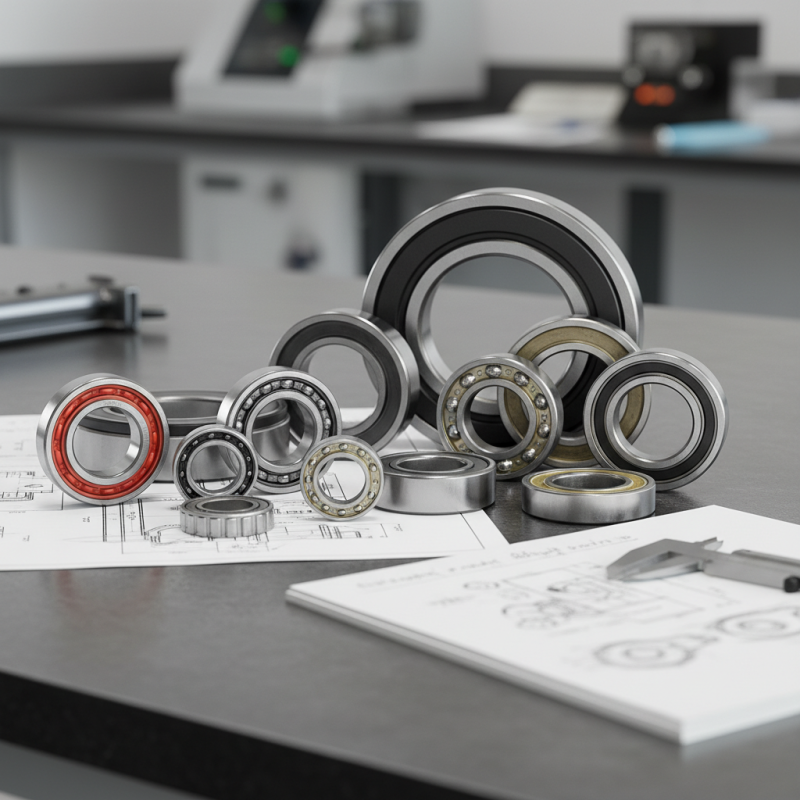
How to Choose the Right Ball Bearing for Your Project?
Choosing the right Ball Bearing for your project can be a challenging task. The countless types available may confuse even experienced engineers. Each application has unique requirements that affect the decision.
Ball bearings are vital components in machines. They reduce friction and enable smooth movement. Understanding the various factors is crucial. Load capacity, speed, and environment play significant roles. It's essential to evaluate your specific needs. Misjudging these factors can lead to project failure.
Sometimes, people overlook quality for cost. This can result in poor performance and early failures. Take the time to analyze your project's demands. In many cases, investing in the right ball bearing pays off in the long run. By taking a thoughtful approach, you can make informed decisions that enhance your project's success.
Factors to Consider When Selecting Ball Bearings
When selecting ball bearings for a project, consider several key factors. The size is crucial. Bearings come in various dimensions. If the fit is too tight, it may cause friction. A loose fit can lead to instability.
Material selection is also important. Common materials include steel, ceramic, and even plastic. Steel offers durability, but may corrode. Ceramic is lightweight and resistant to heat but can be brittle. Understand the working environment. Are there high temperatures? Will there be exposure to moisture?
The load rating matters. Look at dynamic and static load capacities. Too much weight can exceed what the bearing can handle. Speed is another factor. Some bearings are designed for high speeds. Others are better for slower movements. Test your choices to see if they meet the project needs. Sometimes, the ideal bearing is not the most obvious one. Reflect on your choices. Do they align with your project requirements?
Ball Bearings Selection Factors
Different Types of Ball Bearings and Their Applications
Choosing the right ball bearing for your project is crucial. Different types of ball bearings serve various applications. Standard deep groove ball bearings are versatile. They're common in electric motors and automotive applications. Their ability to handle radial and axial loads makes them reliable.
Angular contact ball bearings come into play in high-speed applications. They are designed for combined loads. Often found in machine tool spindles, they excel in precision environments. According to a report from the Bearing Manufacturers Association, this type holds about 25% of the market share.
Here's a tip: Always check the load ratings. Miscalculating can lead to premature failure. Consider environmental factors too. Sealed or shielded bearings may protect against dust and moisture.
For applications requiring high-speed rotations, ceramic ball bearings might be ideal. They can reduce friction and increase durability. However, they may be more brittle and susceptible to shock loads. Assess your project needs carefully before choosing. Ball bearings can affect overall performance significantly.
Understanding Load Ratings and Bearing Life Expectancy
Selecting the right ball bearing involves understanding crucial factors like load ratings and bearing life expectancy. Load ratings indicate the maximum force a bearing can handle. Usually, these ratings are provided as dynamic and static load limits. For example, a deep groove ball bearing may have a dynamic load rating of around 20,000 N. This means it can effectively manage substantial loads during operation.
Bearing life expectancy is defined by standards such as ANSI/ABMA 9. These standards suggest that the median life expectancy can be estimated by a formula involving the load ratings and operating conditions. A typical calculation shows that if you apply a 50% load, the bearing might last about three times longer than at full load. However, not all projects maintain a steady load; fluctuating forces can significantly impact performance.
Many users overlook maintenance schedules. This can lead to premature failures and safety risks. Surprisingly, nearly 35% of bearing failures occur due to inadequate lubrication or misalignment. This statistic underlines the importance of regular checks and operational adjustments. Engaging in proactive maintenance can help mitigate these issues. By understanding these essential metrics, you can make an informed decision in your project.
Key Material Choices for Ball Bearings and Their Impact
Choosing the right material for ball bearings significantly affects their performance. Common choices include steel, ceramic, and polyamide. Steel is strong and durable. However, it can corrode easily. Ceramic offers resistance to wear and heat. It's often perfect for high-speed applications. Yet, it can be brittle and less tolerant of impact.
Polyamide, a type of plastic, is lightweight and resistant to chemicals. It works well in less demanding environments. But it may not hold up under heavy loads. Each material has its pros and cons. For example, while ceramic bearings excel in harsh conditions, they lack the flexibility of steel. Consider the environment and load conditions for your project. Not every option is suitable for every situation. This decision can be the difference between success and failure. Reflect on your specific needs before making a choice.
Installation and Maintenance Tips for Optimal Performance
When it comes to ball bearings, installation and maintenance are key for optimal performance. A report from the World Bearing Association highlights that improper installation can lead to significant failures, reducing a bearing's lifespan by up to 30%. Start by ensuring the work area is clean. Even tiny contaminants can cause issues over time. Carefully align the bearings during installation to avoid unnecessary stress. Tools should be used properly to ensure even pressure is applied.
Regular maintenance is critical. Experts recommend inspecting ball bearings every six months. This includes checking for signs of wear, rust, or noise. Often, lubrication is overlooked. The right lubricant can enhance performance, and using too much or too little can be harmful. For instance, a data study indicates that over-greasing can lead to higher operating temperatures, reducing efficiency by nearly 20%. The practice should be adjusted based on operational conditions and loading factors.
Even seasoned professionals sometimes make small errors. It’s vital to take your time and double-check each step. Rushing through the process can lead to overlooking small but essential details. Learning from these experiences can be invaluable. Reflecting on both successes and mistakes will enhance your skills in managing ball bearings effectively.
How to Choose the Right Ball Bearing for Your Project? - Installation and Maintenance Tips for Optimal Performance
| Bearing Type | Load Rating (kg) | Speed Rating (RPM) | Material | Applications |
| Deep Groove Ball Bearing | 200 | 6000 | Steel | Electric Motors, Pumps |
| Angular Contact Ball Bearing | 150 | 9000 | Ceramic | High-Speed Machinery |
| Self-Aligning Ball Bearing | 180 | 3000 | Stainless Steel | Agricultural Equipment |
| Thrust Ball Bearing | 100 | 5000 | Bronze | Gearboxes |
| Ball Bearing Units | 220 | 4000 | Polymer | Conveyor Systems |