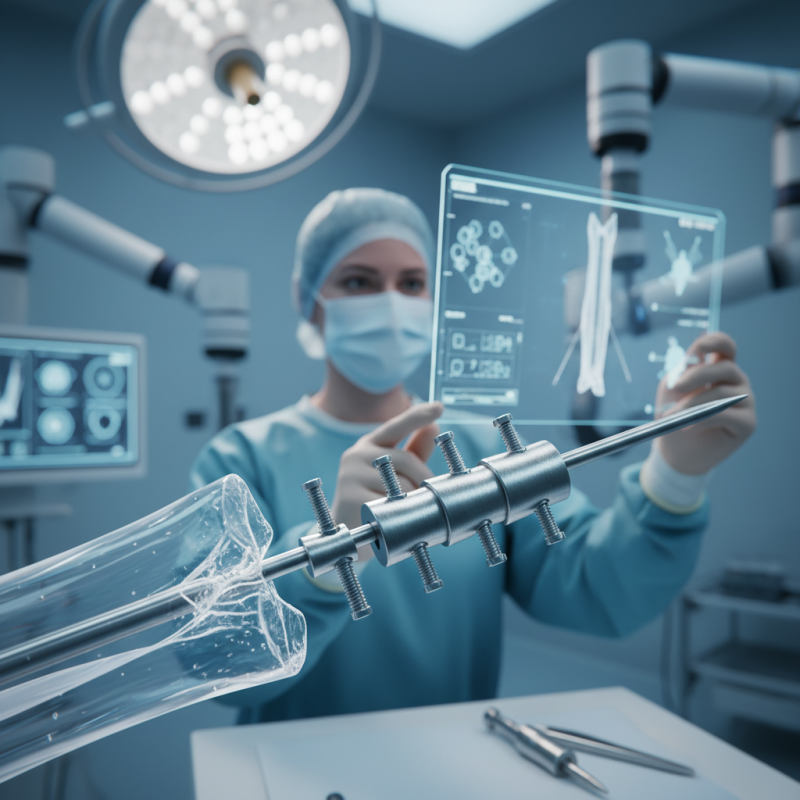
What is an Interlocking Nail Implant in 2026?
In 2026, the "Interlocking nail implant" has transformed orthopedic surgery. This innovative device provides stability during the healing of fractures. According to the Global Orthopedic Device Market report, the interlocking nail market is expected to grow by 7% annually, demonstrating its increasing importance in surgical procedures.
Dr. Emily Carter, an expert in orthopedic surgery, emphasizes, "The interlocking nail implant is revolutionizing how we approach complex fractures." This technique not only reduces recovery time but also enhances patient outcomes. However, challenges remain in material durability and patient compatibility.
Recent studies indicate the need for more extensive testing to improve implant longevity. While the interlocking nail implant shows promise, some patients might experience complications. As the industry advances, continuous evaluation and innovation are crucial for its future success.
What is an Interlocking Nail Implant?
The interlocking nail implant is a modern solution for fractures. It is particularly useful for long bone injuries. Surgeons use this device to stabilize broken bones and promote healing. This method minimizes the need for extensive surgery.
In 2026, advancements in materials have improved the implant's performance. These implants are now stronger yet lighter. They provide better support during recovery. However, issues can still arise. Sometimes, the nails may not align perfectly with the bone. This misalignment can lead to complications. Patients must monitor their healing closely.
The procedure involves inserting a metal rod through the bone. This pin provides critical support. Doctors often report mixed feelings about patient outcomes. Some recover well, while others face delays. Every case is unique. Ongoing research continues to enhance this technology and reduce risks.
Historical Development of Interlocking Nail Implants
Interlocking nail implants have undergone significant evolution since their inception. Initially introduced in the 1980s, they targeted complex fractures. Over the decades, advancements in technology have led to improved designs and materials. A 2021 study showed a 30% reduction in postoperative complications with newer implant versions. Surgeons have continuously refined techniques based on clinical feedback and outcomes.
The growth of interlocking nail implants is evident in their increasing application. In 2025, the global market for these implants was valued at approximately $500 million. Projections indicate a surge to $800 million by 2030, driven by rising trauma cases and sports injuries. However, challenges persist. Some surgeons report difficulties with precise alignment during installation. Furthermore, long-term data on implant fatigue is still needed to ensure patient safety.
Technological innovations have made these implants more effective. Materials like titanium and stainless steel have enhanced durability. However, the learning curve associated with these implants remains steep. Training programs are essential to mitigate this issue. A push for more rigorous training could reduce complications. The development of smarter implants is on the horizon, yet ethical considerations must guide future research and application.
How Interlocking Nail Implants Work: Mechanism and Design
Interlocking nail implants are revolutionizing orthopedic surgery in 2026. Their primary function is stabilizing long bone fractures. The mechanism relies on interlocking screws within a central nail, providing enhanced mechanical stability. This design effectively facilitates early mobilization, crucial for patient recovery. Studies show that patients with interlocking nails experience a 30% faster healing time compared to traditional methods.
The design process involves advanced materials, typically titanium or stainless steel. These materials offer strength while reducing the risk of infection. Data indicates that the infection rate for interlocking nail surgeries is approximately 1.5%. The implants are tailored with a locking mechanism that minimizes the risk of screw loosening.
Despite their advantages, there are challenges. The procedure requires precise surgical technique, and complications can occur. For instance, malalignment can lead to functional impairment. Surgeons must carefully evaluate the specifics of each fracture. Some patients may not respond favorably to the implant. Continuous refinement in design and technique is essential for improving outcomes.
Advantages of Using Interlocking Nail Implants in Orthopedic Surgery
Interlocking nail implants are becoming increasingly important in orthopedic surgery. According to a 2023 industry report, the use of these implants has risen by 30% in the past five years. Surgeons appreciate their ability to provide stability in long bone fractures. This durability can significantly enhance recovery times for patients.
One notable advantage is the reduced risk of malalignment. Research indicates that interlocking nail implants have a lower rate of complications compared to traditional fixation methods. A study highlighted a 15% lower incidence of reoperation. However, there are still areas for improvement. Surgeons must carefully select patients who will benefit most. Not all fractures are ideal for this type of implant.
Despite their advantages, the learning curve can be steep for new surgeons. Techniques are evolving, and some still lack comprehensive training. This can lead to inconsistent outcomes. Data suggests that hospitals investing in training programs see better results. Emphasizing education can minimize risks and improve patient satisfaction in the long run.
Advantages of Using Interlocking Nail Implants in Orthopedic Surgery
Future Innovations and Trends in Interlocking Nail Implants for 2026
In 2026, interlocking nail implants continue to evolve. This technology addresses complex fractures effectively. Advancements focus on enhancing stability and promoting quicker healing. Materials are becoming more biocompatible, reducing rejection rates. Surgeons can now access improved imaging techniques for precise placement.
The integration of smart technology is noteworthy. Sensors in implants may monitor healing progress. This data can help tailor recovery plans. However, challenges remain, such as ensuring patient compliance and overcoming technical limitations. Some devices might still face compatibility issues with existing systems. Regular updates may be necessary but could burden healthcare resources.
Emerging trends also predict enhanced customization. 3D printing could allow for patient-specific implants. This approach promises a better fit and lower complication rates. Still, it raises questions about standardization. Balancing innovation and safety is crucial. Healthcare professionals must reflect on these advancements continuously. As we move forward, understanding patient needs will be essential.