Top 10 Metallurgical Bridge Crane Applications and Benefits?
In the world of heavy industry, the Metallurgical Bridge Crane stands out. This powerful equipment has diverse applications and significant benefits. According to Dr. John Smith, a leading expert in crane technology, “Metallurgical Bridge Cranes are essential for optimizing material handling in the metallurgical sector.” His insights highlight the impact of these cranes on operational efficiency.
Metallurgical Bridge Cranes are widely used in steel mills and foundries. They lift and transport large, heavy materials seamlessly. This capability boosts productivity and ensures safety, reducing the risk of workplace accidents. Such cranes can handle molten metal, a challenging task that demands precision. However, the selection and maintenance of these cranes require careful consideration.
Despite their advantages, there are challenges. Not every facility has the resources to implement advanced crane systems. Training operators is another concern. Proper operation is crucial to prevent accidents. As industries evolve, the need for effective solutions remains constant. The Metallurgical Bridge Crane embodies both promise and complexity in handling heavy materials.
Overview of Metallurgical Bridge Cranes in Industrial Settings
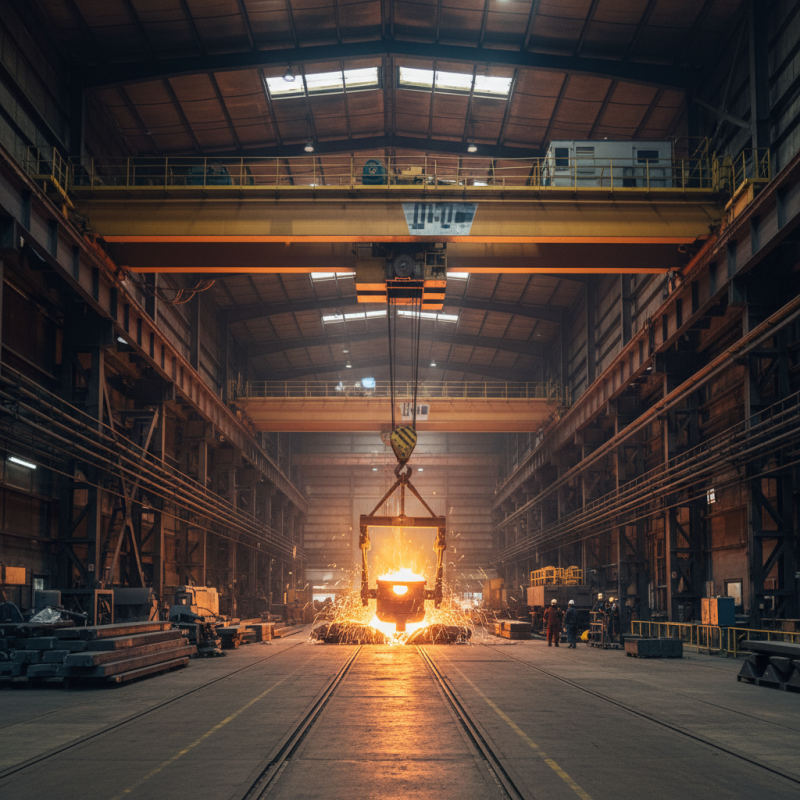
Metallurgical bridge cranes play a vital role in industrial settings. They are widely used in steel manufacturing, automotive production, and heavy fabrication. These cranes handle various materials, including molten metal. This critical operation often requires specialized features to ensure safety and efficiency.
Statistics from recent industry reports indicate that around 30% of all industrial accidents occur during material handling. Metallurgical bridge cranes significantly reduce these risks. They automate the lifting and transporting of heavy loads, which minimizes human error. The introduction of advanced control systems further enhances operational safety.
Moreover, these cranes can improve productivity. By lifting loads up to 100 tons, they streamline processes, reducing cycle times. In some facilities, the use of bridge cranes has led to a 20% increase in production efficiency. However, maintenance remains a challenge. Regular inspections and upkeep are necessary to avoid breakdowns and ensure safety. Investing in reliable training programs for operators is equally important. This focus not only safeguards workers but also optimizes the cranes' performance.
Key Applications of Metallurgical Bridge Cranes Across Industries
Metallurgical bridge cranes play a vital role in various industries. They are commonly used in steel mills and foundries. Recent reports indicate that the global market for these cranes is projected to reach $1.8 billion by 2025, reflecting their importance.
One key application is in the steel production process, where these cranes handle heavy steel slabs. They lift and move materials, ensuring efficiency. Also, they aid in recycling processes, lifting scrap metals with precision. The design often includes specialized hooks and magnets, enhancing usability in tough environments.
Another significant sector is manufacturing. Here, metallurgical bridge cranes facilitate assembly lines. Workers benefit from reduced strain as these cranes handle loads. However, operators face challenges such as maintenance issues and safety concerns. Proper training is essential, as accidents can be costly. In fact, OSHA reports show that crane accidents account for nearly 20% of all construction-related fatalities. This underlines the need for ongoing reflection on safety protocols in crane operations.
Benefits of Using Metallurgical Bridge Cranes in Material Handling
Metallurgical bridge cranes play a critical role in material handling within heavy industries. Their robust design allows them to lift and maneuver heavy loads safely. These cranes are ideal for steel mills and foundries, where large components are commonplace. They enhance efficiency by moving materials from one point to another without the need for manual labor.
One key benefit of metallurgical bridge cranes is their ability to save time. With quicker load handling, production processes become more seamless. Workers can focus on critical tasks rather than being bogged down by labor-intensive lifting. Safety is another significant advantage. These cranes reduce the risk of accidents by providing a controlled environment for heavy lifting.
Tip: Regular maintenance of your cranes is crucial. Small issues, if left unattended, can lead to significant problems. Check for wear and tear often.
Another consideration is space utilization. These cranes can operate in tight areas. Their overhead design maximizes floor space, allowing for better workflow. This is especially useful in busy settings where every inch counts.
Tip: Train operators adequately. Poorly trained personnel can lead to accidents or inefficiencies. Prioritize training to enhance safety and productivity.
Top 10 Metallurgical Bridge Crane Applications and Benefits
This chart represents the top 10 applications and benefits of metallurgical bridge cranes in material handling, highlighting their significance across various industrial sectors.
Safety Considerations for Metallurgical Bridge Crane Operations
Safety is paramount in metallurgical bridge crane operations. These cranes often handle heavy materials. Therefore, ensuring the safety of operators and surrounding personnel is crucial. Regular inspections can identify potential hazards. A worn-out part can lead to a catastrophic failure. Operators must be trained in emergency procedures. Knowing how to react can save lives.
Proper calibration and load testing are essential. Overloading can cause the crane to become unstable. This poses a severe risk not just to the crane but also to people nearby. Attention to detail can prevent accidents. Implementing safety protocols should be a priority. Wearing personal protective equipment can further reduce risks. Yet, some workers may neglect it, believing it slows them down.
Communication is key in a busy workspace. Clear signals and signs can prevent misunderstandings. However, even with training, mistakes can occur. It’s important to foster a culture where workers feel safe to report issues. Learning from past incidents can lead to better practices. Regular safety drills can also enhance readiness and awareness. Each operation should focus on continuous improvement in safety measures.
Future Trends in Metallurgical Bridge Crane Technology and Usage
Metallurgical bridge cranes play a vital role in the manufacturing process. Their ability to lift heavy loads safely and efficiently makes them indispensable in metallurgy. As industries evolve, so do their requirements. Recent reports indicate a 25% increase in demand for advanced crane technology. This trend shows no signs of slowing down.
Future innovations focus on enhancing safety and efficiency. Smart technology integration allows for real-time monitoring of operational data. This data helps in predictive maintenance, reducing unexpected downtime by up to 30%. However, not all facilities are equipped for these advancements. Many still rely on outdated systems, which can lead to accidents and increased costs.
Environmental considerations are also becoming crucial. Green technology, such as electric motors, is gaining traction. The global market for eco-friendly cranes is expected to reach $5 billion by 2025. Still, implementing these systems requires significant investment and overhaul of existing infrastructure. As industries seek to balance modernization and cost, the path ahead is complex but necessary.
Top 10 Metallurgical Bridge Crane Applications and Benefits
| Application | Key Benefits | Future Trends |
| Steel Production | Efficient handling of heavy steel loads | Automation integration with AI for better load management |
| Casting Processes | Precision lifting of molds | Smart sensors for real-time monitoring |
| Material Handling | Reduced risk of workplace accidents | Integration with IoT for fleet management |
| Heavy Equipment Maintenance | Facilitates maintenance on large machinery | Use of AR for maintenance guidance |
| Logistics and Warehousing | Maximized warehouse space utilization | Enhanced data analytics for inventory tracking |
| Research and Development | Supports innovative material testing | Collaboration with academic institutions |
| Recycling and Scrap Management | Streamlined processing of recycled materials | Increased focus on eco-friendly practices |
| Construction Projects | Facilitates large building components assembly | Modular construction trends driving demand |
| Safety Management | Improved safety standards in operations | Predictive maintenance using data analysis |
| Quality Control | Ensures standards are consistently met | Integration of machine learning for defect detection |